
5% off your first Design & Build project · 10% off when you refer a friend

24/7 Emergency
Ash Villa Development Ltd — Plumbing & Heating Services
Leak Detection · West London

Find the leak.Fix the leak.Protect the property.

Concealed leaks are the most expensive kind of plumbing fault — because you pay for the damage before you pay for the repair. We locate the source with minimal disruption and fix it cleanly, first time.

Gas Safe registered · £2M insured · 30+ years in the trade · 24/7 emergency line

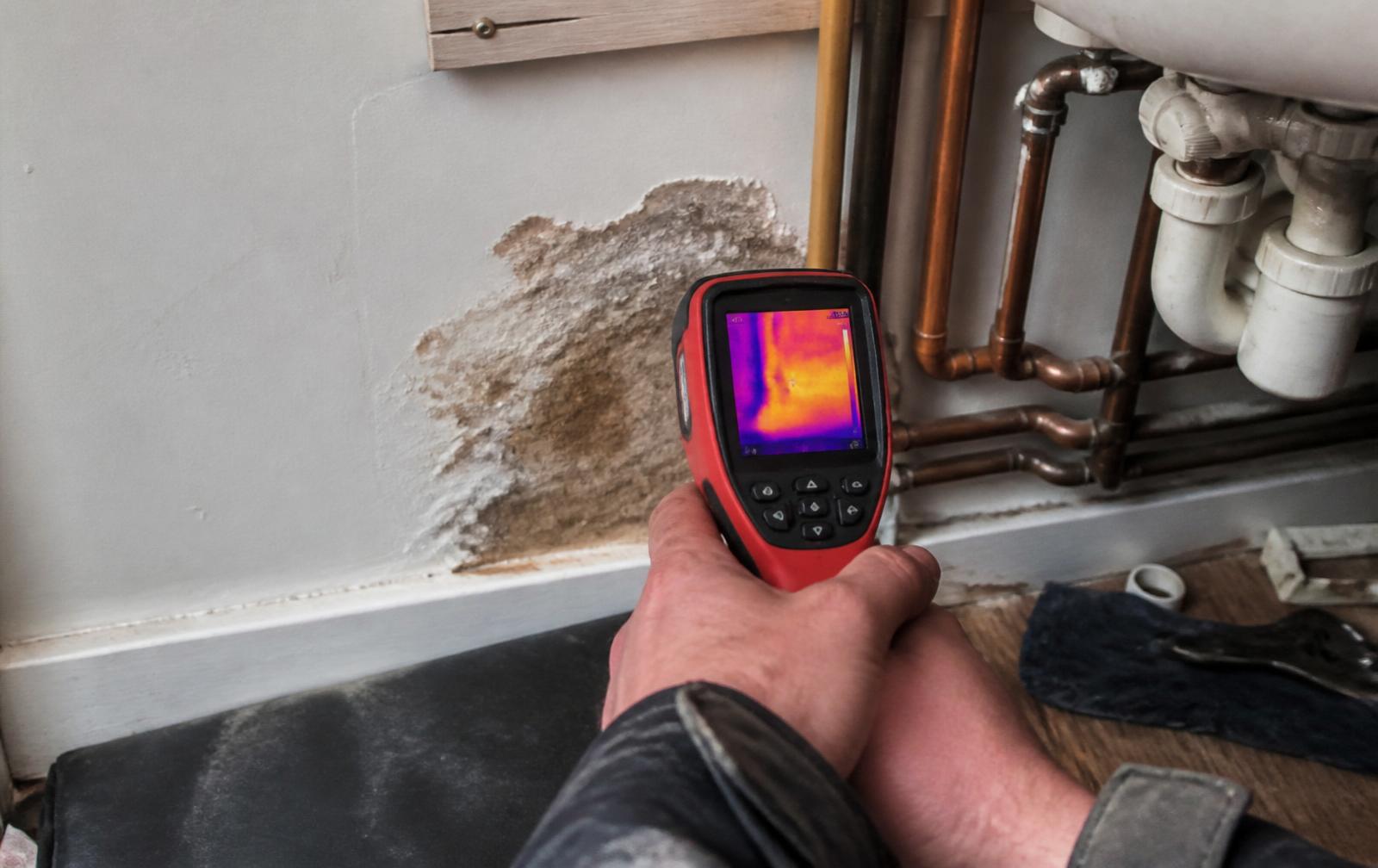
Handheld thermal imaging camera beside exposed copper pipework in a damp wall — Ash Villa leak detection and repair in West London
30+ Years in the Trade
Gas Safe Registered
Vaillant Approved Installer
£2M Public & Employers' Liability
90-Minute Emergency Response
Service Overview

The plain-English version.

What it is

Non-invasive leak detection and repair — mains water leaks, hot and cold pipework, central heating leaks, cylinder leaks and appliance leaks. Investigation, location, repair and reinstatement.

Who it's for

Homeowners, landlords and commercial premises seeing damp patches, unexplained water bills, boiler pressure drops or ceiling stains.

When you need it

When you can hear water when everything's off, when the boiler needs topping up too often, when a ceiling shows a growing stain, or when the water meter keeps turning with nothing running.

Why use a professional

A leak found early is a repair job. A leak found late is a rebuild. Getting the location right first time saves cutting open five wrong ceilings.

Left Too Long?

Small problem now.
Big bill later.

The cheapest time to deal with a plumbing or heating fault is almost always now. Water damage, gas issues and system stress compound quickly — the invoice grows with them.

If you leave it

  • Slow leaks rot joists, blow plaster and short-circuit downlights — usually months before the stain appears.
  • A dripping heating pipe drops boiler pressure, and constant topping up brings fresh oxygen into the system — accelerating internal corrosion.
  • Insurance claims for water damage are contentious; late-discovered leaks are often argued to be excluded gradual damage.
  • Mains-side leaks under the drive can go unnoticed for years while your water bill quietly climbs.

Common DIY mistakes

  • Cutting a random hole in the ceiling to 'have a look'.
  • Turning pressure back up on a leaking heating system and calling it fixed.
  • Sealing a suspected leak from the outside with mastic — the water just finds the next path.
  • Assuming a wet patch is the leak location — water travels along joists and pipes for metres.
Our Process

Predictable. Documented.
Signed off.

You get the same sequence every time — so there are no surprises on the invoice and nothing missed on the job sheet.

  1. 01

    Symptom review

    We walk through when you first noticed it, what changed, boiler pressure history and any recent building work.

  2. 02

    Isolation & pressure test

    Systems are isolated and pressure-tested to confirm which one is losing water — mains, hot, cold or heating.

  3. 03

    Localisation

    Thermal, acoustic and visual methods used to narrow the source before opening anything.

  4. 04

    Access

    Minimum-invasive access — small openings in the right place, not exploratory demolition.

  5. 05

    Repair

    Correct-fitting repair on the identified section, tested under pressure before reinstatement.

  6. 06

    Reinstatement & report

    Openings made good; written summary provided for your records and your insurer if relevant.

What You Actually Get

Concrete outcomes,
not marketing fluff.

Minimum disruption

We locate before we cut. That's the difference between one small opening and a demolished ceiling.

Correct diagnosis

We identify which system is leaking (mains, hot, cold, heating) before touching anything.

Insurance documentation

Written diagnosis and photos for insurers who will otherwise argue the toss on cause and date.

Whole-system pressure test

Repair confirmed under real pressure — not just eyeballed dry after the visit.

One team for repair & make-good

Same team detects, fixes, and reinstates — no scheduling three trades for one leak.

Long-term fixes

Where the same section keeps failing, we re-route in modern materials rather than patch again.

The Detail

Materials, methods, and where the money goes.

There are only a handful of ways a home can leak water. Correct diagnosis starts by ruling systems out one at a time.

Mains-side leaks

Signs: water meter turning with everything off, unexplained bill spikes, damp along the mains route (drive, front path, kitchen wall). Isolation at the external stopcock and internal stopcock quickly proves which side of the internal stop the leak is on.
Central heating leaks

Signs: boiler pressure dropping over days or weeks. Sealed systems shouldn't lose pressure at all. Pressure-testing sections of pipework and radiators identifies the loss, whether it's a hairline pipe crack, a failed radiator valve, or a leaking heat exchanger inside the boiler.

Hot water and cylinder leaks

Cylinders, immersion flanges and expansion vessels can weep quietly for months. Continuous drips at the tundish, damp inside the airing cupboard or corrosion on the cylinder are all common tells. G3 qualified diagnosis and repair.

Concealed pipework and behind-wall leaks

Thermal imaging and acoustic listening help pinpoint the source without opening walls. Where localisation is precise, a single 200mm access panel is often all that's needed — vs. tearing off an entire tile splashback.

Appliance and waste leaks

Dishwashers, washing machines and instant-hot-water taps all fail differently to pipework — supply pipes, drain hoses, pump seals. We check appliance connections as part of the diagnosis so a 'plumbing leak' doesn't turn out to be a washing machine seal.

Frequently Asked

The questions we hear on the phone.

Nothing here is generic — these are answers we give West London customers every week.

Ask us directly
How do you find a leak without ripping the ceiling apart?

We isolate systems, pressure test to identify which system is leaking, then use thermal imaging and acoustic listening equipment to localise before making any access opening.

How much does leak detection cost?

For an emergency detection visit the rate is £80 for the first hour, then £120/hr. Planned detection is quoted fixed after we understand the symptoms.

Do you provide reports for my insurance company?

Yes. Written diagnosis, cause, photographs and repair record — the paperwork insurers want to process a claim without argument.

How long does leak detection take?

Most leaks are localised inside the first hour or two on site. Repair time depends on access and the specific fault.

Will you fix the leak the same day?

Where possible, yes. Some repairs require parts (e.g. specific valves, cylinder components) and are booked back in with a firm price.

Do you repair the ceiling / wall after?

We make good the access openings we create as part of the plumbing repair. For decorative reinstatement (redecoration, tiling) we can quote as part of a wider works package via our design & build team.

What are the signs I have a hidden leak?

Boiler pressure dropping, water meter turning with nothing running, sudden water bill increase, unexplained damp patches, mould appearing on internal walls, tapping/hissing sounds when the house is quiet.

Do you use invasive methods?

Only as a last resort and only in the exact identified location. Minimum-invasive access is the standard.

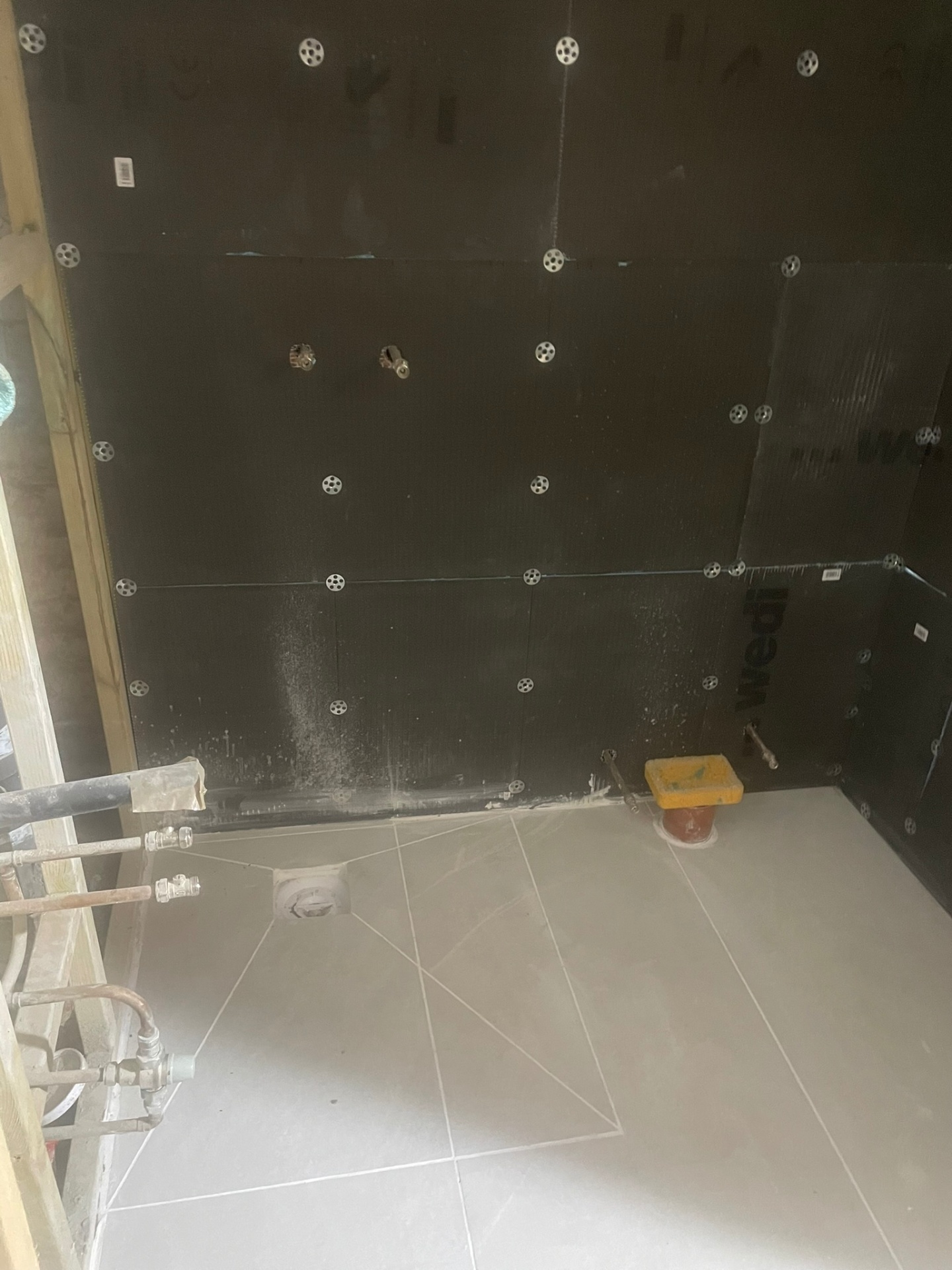
Wet room tanking and waterproofing in progress at an Ash Villa Development project in West London
Next Step

Book a free on-site quote.
Get a firm price in 2–3 days.

No pressure, no obligation. A Gas Safe engineer visits, scopes the job in person, and puts a written quote in your inbox — usually within 2–3 working days. For emergencies, call the line — it's answered 24/7 by the team, not a call centre.

Request My Free Quote 07947 961502

Gas Safe registered · £2M insured · 30+ years in the trade · 24/7 emergency line

Call NowFree Quote