
5% off your first Design & Build project · 10% off when you refer a friend

24/7 Emergency
Ash Villa Development Ltd — Plumbing & Heating Services
Unvented Cylinder Installation · West London

Hot waterat proper pressure— safely and legally.

G3 qualified plumbers installing and servicing unvented cylinders, immersion heaters and instantaneous water heaters — with the correct safety devices, labelling and paperwork every insurer and building surveyor expects.

G3 qualified · Gas Safe · Building Regs Part G compliant · £2M insured

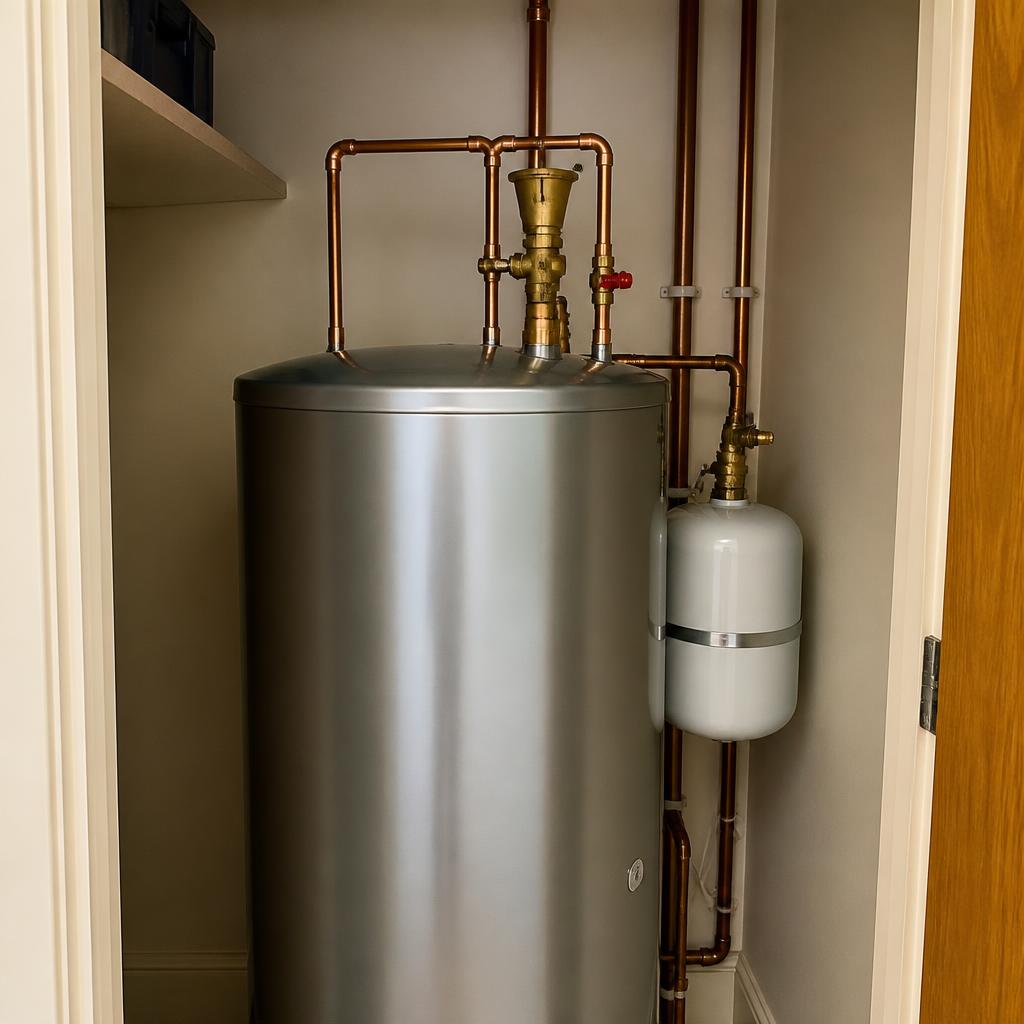
Large grey stainless-steel unvented hot water cylinder in an airing cupboard with neat copper pipework, brass tundish, red isolation valve and white expansion vessel — Ash Villa G3 certified unvented cylinder installation
30+ Years in the Trade
Gas Safe Registered
Vaillant Approved Installer
£2M Public & Employers' Liability
90-Minute Emergency Response
Service Overview

The plain-English version.

What it is

Installation, replacement and servicing of unvented cylinders, vented (gravity) cylinders, direct/indirect cylinders, immersion heaters and small point-of-use water heaters.

Who it's for

Homeowners upgrading from gravity systems for better shower pressure, larger homes with multiple bathrooms, and landlords maintaining safe, compliant hot-water systems.

When you need it

When mains pressure allows and you want proper flow at every tap; when replacing a failing cylinder; when converting a heat-only system to include stored hot water.

Why use a professional

Unvented cylinders are pressurised vessels — installation is a G3 matter under Building Regulations Part G. Done incorrectly, the risks are real and serious.

Left Too Long?

Small problem now.
Big bill later.

The cheapest time to deal with a plumbing or heating fault is almost always now. Water damage, gas issues and system stress compound quickly — the invoice grows with them.

If you leave it

  • Dripping tundishes are the earliest sign of a failing expansion vessel — leave it and the cylinder pressurises past its design limit.
  • A missing or failed T&P valve on an unvented cylinder is a genuine safety hazard, not just a compliance issue.
  • Old vented cylinders leak from the seam over years — the loft-tank drop follows shortly after.
  • Immersion heaters that trip repeatedly point to scaled elements or failing thermostats — full failure follows.

Common DIY mistakes

  • Any DIY work on an unvented cylinder — it's illegal under Building Regs unless carried out by a G3 qualified person.
  • Fitting an unvented cylinder without checking incoming mains pressure and flow rate.
  • Skipping annual servicing on unvented cylinders — voids warranty and misses failing components.
  • Blanking a discharge pipe because it drips — that drip is telling you something.
Our Process

Predictable. Documented.
Signed off.

You get the same sequence every time — so there are no surprises on the invoice and nothing missed on the job sheet.

  1. 01

    Survey

    We measure incoming mains pressure and flow rate, calculate hot-water demand, and assess airing-cupboard space and discharge routing.

  2. 02

    Written quote

    Cylinder model, ancillaries, discharge pipework and controls — quoted fixed.

  3. 03

    Install (G3)

    Cylinder fitted by G3 qualified plumbers with correct safety group: expansion vessel, PRV, T&P valve, tundish, discharge pipe.

  4. 04

    Commission & label

    Filled, purged, temperature set, thermostat verified, discharge routed safely, labelled to Building Regs.

  5. 05

    Paperwork

    Benchmark completed, Building Regs Part G notification issued through a competent-person scheme where relevant.

  6. 06

    Annual service

    Optional annual service to maintain warranty and safety — expansion vessel pressure checked, safety valves tested.

What You Actually Get

Concrete outcomes,
not marketing fluff.

Proper mains pressure at every tap

Unvented systems give you mains-pressure showers throughout the house — no more third-floor dribble.

G3 qualified and compliant

Legal, insured, correctly notified — no future conveyancing surprises.

Correctly sized

Cylinder capacity matched to your bathroom count and household size — hot water that keeps up on Sunday morning.

Safe discharge routing

Tundish and discharge routed to spec — no risk of scalding water venting into the airing cupboard or a loft void.

Full paperwork

Benchmark and Building Regs notification issued — the paperwork you'll want at sale time.

Annual servicing option

Keep the warranty valid and catch weep-stage faults before they become failures.

The Detail

Materials, methods, and where the money goes.

Hot-water storage is one of the more regulated areas of domestic plumbing. Here's what actually goes in and why every component matters.

Unvented cylinders

Pressurised, mains-fed cylinders — stainless or copper — connected to a boiler (indirect) or heated by immersion (direct). Deliver mains-pressure hot water throughout the property. Installation requires G3 qualification under Building Regulations Part G because of the stored-energy safety implications.
The safety group — what and why

Every unvented cylinder must have: an expansion vessel (absorbs the expansion of heated water), a pressure reducing valve (PRV — keeps incoming pressure below the cylinder rating), a T&P valve (temperature and pressure relief — vents the cylinder if anything goes wrong), and a tundish plus discharge pipe (routes any relief water safely to drain, with a visible air break so you can see if it's discharging).

Vented (gravity) cylinders

Older, gravity-fed cylinders with a cold-water storage tank in the loft. Lower pressure, no G3 requirement, cheaper to install and maintain. Perfectly serviceable in the right property; not always the right choice for larger homes or multi-bathroom lifestyles.

Immersion heaters

Electric heating elements inside the cylinder — usually as a backup or off-peak (Economy 7) heat source. Elements scale up over years, thermostats fail; replacement is straightforward but requires the cylinder to be isolated and drained.

Point-of-use water heaters

Small under-sink or utility-room water heaters for locations where running a full hot-water line isn't practical — outbuildings, cloakrooms, retrofit utility spaces. Installed with correct isolation, expansion protection and appropriate electrical supply.

Frequently Asked

The questions we hear on the phone.

Nothing here is generic — these are answers we give West London customers every week.

Ask us directly
Do I have to be G3 qualified to work on an unvented cylinder?

Legally, yes. Under Building Regulations Part G, work on unvented cylinders must be carried out by a G3 qualified installer. All our cylinder work is G3.

How much does an unvented cylinder install cost?

Quoted fixed after an on-site survey. Price depends on cylinder capacity, incoming mains pressure/flow, discharge routing and any pipework changes.

How big a cylinder do I need?

Rule of thumb: 150L for 1 bathroom, 210L for 2 bathrooms, 250L+ for 3 bathrooms or larger households. We size on actual demand during the survey.

How long does an install take?

A like-for-like cylinder replacement is typically 1 day. A vented-to-unvented conversion or a new install with new pipework is usually 2–3 days.

Do you service unvented cylinders?

Yes. Annual servicing checks expansion vessel pressure, tests safety valves, verifies discharge, and keeps manufacturer warranties valid.

My tundish is dripping — is that serious?

Yes — it's the earliest warning that either the expansion vessel has lost pressure or a safety valve is passing. Book a service visit; don't ignore it.

Can I get mains pressure without an unvented cylinder?

Combi boilers give mains-pressure hot water instantly, but flow rate is limited to whatever the boiler can heat on-the-fly. For simultaneous demand across multiple bathrooms, a system boiler + unvented cylinder is usually a better answer.

What paperwork do I get?

Benchmark commissioning record, manufacturer warranty registration, and Building Regs notification through a competent-person scheme where applicable.

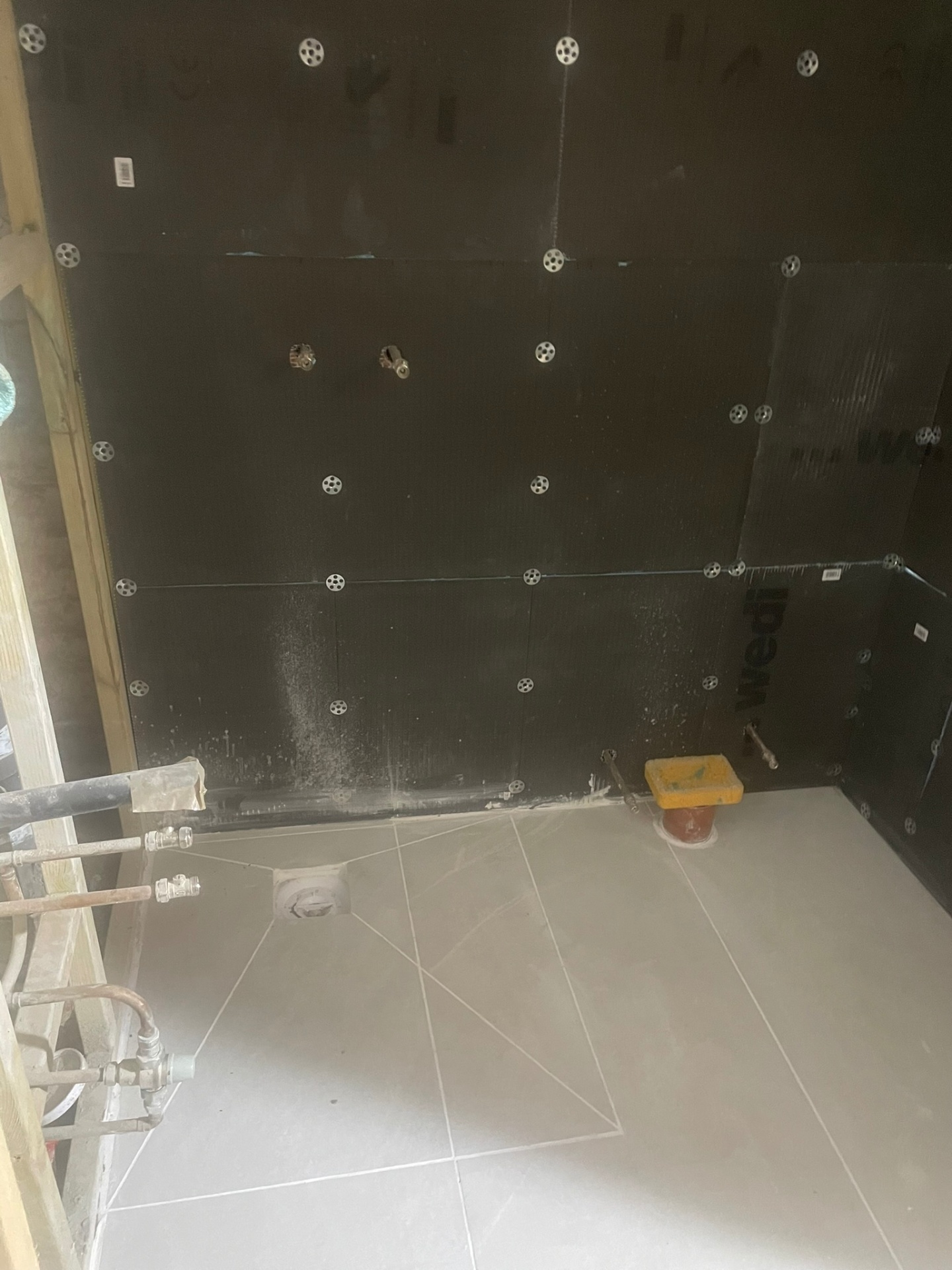
Wet room tanking and waterproofing in progress at an Ash Villa Development project in West London
Next Step

Book a free on-site quote.
Get a firm price in 2–3 days.

No pressure, no obligation. A Gas Safe engineer visits, scopes the job in person, and puts a written quote in your inbox — usually within 2–3 working days. For emergencies, call the line — it's answered 24/7 by the team, not a call centre.

Request My Free Quote 07947 961502

G3 qualified · Gas Safe · Building Regs Part G compliant · £2M insured

Call NowFree Quote